You can hear me in the current issue of ABC's online StarStuff program, talking about recent results from the MiniBooNE and MINOS experiments at the Fermi National Accelerator Laboratory ("Fermilab") outside Chicago. Our segment starts about ten minutes into the program. [A ?permanent? link to the MP3 can be found here: starstuff20100630.mp3; the file is 15MB.]
Both experiments have presented preliminary results that hint at differences between matter and antimatter — specifically, kinds of differences that should not occur on our current understanding. And so there has been a certain amount of fuss.
Unlike the work mentioned in the previous post, which concerned mesons, the new results are from experiments on those most fascinating and frustrating of elementary particles, neutrinos. Complicating the interpretation is that there are anomalies in earlier MiniBooNE data which are still not understood.
If you're after a written version of the story, there is an article at PhysOrg.com.
Wednesday, 30 June 2010

Thursday, 17 June 2010
Coming up for air
I guess it's kind of obvious that I've been preoccupied in the last six months. One of my preoccupations has now reached its conclusion: our most recent major paper on CP violation has just been published in Physical Review D. (A publicly accessible version can be found on the physics preprint server:
arXiv:1003.3360 [hep-ex].) The short version is that CP violation is important in answering the question "how is it possible for you to be here?". (Note that I didn't say that the question was "why are you here?". A lot hangs on that distinction.)
I discussed some of the issues briefly in a previous post on the 2008 Nobel Prize in Physics.
More on other things soon.
arXiv:1003.3360 [hep-ex].) The short version is that CP violation is important in answering the question "how is it possible for you to be here?". (Note that I didn't say that the question was "why are you here?". A lot hangs on that distinction.)
I discussed some of the issues briefly in a previous post on the 2008 Nobel Prize in Physics.
More on other things soon.
Sunday, 21 February 2010
Scott on Streep, and the Eighties
The reputation that Ms. Streep earned for her work in those films retains more luster than most of the movies themselves. Sandwiched between the endlessly mythologized Golden Age of ’70s New Hollywood and the now almost equally sentimentalized decade of the American Indies, the ’80s are comparatively bereft of nostalgic movie-fan affection or revisionist critical love. And yet the respectable films of that era may represent the last gasp of a noble middlebrow ideal. They were ambitious, unapologetically commercial projects intended for the entertainment and edification of grown-up audiences, neither self-consciously provocative nor timidly inoffensive. Some of us grew up on movies like “Sophie’s Choice” and “Out of Africa,” and our fondness outlasts the sense that we eventually outgrew them. Nowadays “Kramer vs. Kramer” and “A Cry in the Dark” would be scruffy little Sundance movies. “Out of Africa” would be in French. “Silkwood” would be “The Blind Side.”A.O. Scott's full article, on the occasion of Meryl Streep's 16th Academy Award nomination, is here on the NYT movie site.
Ms. Streep — grave, scrupulously attentive to the nuances of performance, imbuing every gesture with the values of craftsmanship and respect for quality — was not only the star of so many of these ’80s Oscar movies, but also the most recognizable embodiment of their aesthetic...
Sunday, 24 January 2010
Someone old, nothing new, someone French, someone blue; someone radiant, some history, and a good point
Some things I noticed recently:
One gets a much more measured treatment of the ongoing disaster in Haiti from the NYT than one does from the TV news in Sydney: even the ABC. That's not unusual, but it's still disappointing.
A biologist's love-letter to Avatar. The film itself: wow. The praise is all true, and some of the criticism is true too. This old Alien fan certainly enjoyed the fact that Sigourney Weaver was having the time of her life, both as her character, the splendidly named Dr Grace Augustine, and as that character's alter-ego, a cheeky twentyish eleven-foot tall blue chick with a yen for basketball. (Another nice nod to the Alien films, there.) And amidst all of the reactions to the film, it was very instructive to read a discussion with the Osservatore Romano reviewer whose previous remarks have been taken, as they say, out of context.
The remarkable American strongman Joe Rollino has has died at 104
The director Eric Rohmer also died recently: the NYT has both an obituary and an appreciation by A.O. Scott. I have only seen a few of his films but would happily see the rest, just on that basis. If it were 10 or 15 years ago, I'd expect SBS to put on a retrospective. But now?
In other cinema news, there is a good NYT article on the wonderful Laura Linney: longstanding theatre and film actress, a superb talent with a sharp mind and a professional's attitude, always a little under-the-radar and a little under-rated on the street. And wasn't she superb as Abigail Adams?
The NYT has put out an interactive timeline on the Science and Politics of Climate Change, with links to various historical stories, for example from 1956 and from 1979: the latter of these being the rough period that I would have become aware of the issue. I find this interesting because, as a science brat with all sorts of age-innapropriate concerns and sources of knowledge (and values, and prejudices, and ...) it isn't always obvious to me what other people had access to, when, and on what terms. This article appears to have been from a supplementary section of the paper: a good paper, admittedly, but a regular daily nonetheless.
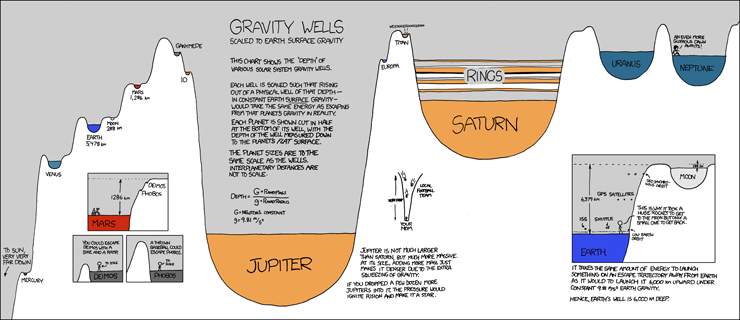
xkcd on the truth lying between two extremes
One gets a much more measured treatment of the ongoing disaster in Haiti from the NYT than one does from the TV news in Sydney: even the ABC. That's not unusual, but it's still disappointing.
A biologist's love-letter to Avatar. The film itself: wow. The praise is all true, and some of the criticism is true too. This old Alien fan certainly enjoyed the fact that Sigourney Weaver was having the time of her life, both as her character, the splendidly named Dr Grace Augustine, and as that character's alter-ego, a cheeky twentyish eleven-foot tall blue chick with a yen for basketball. (Another nice nod to the Alien films, there.) And amidst all of the reactions to the film, it was very instructive to read a discussion with the Osservatore Romano reviewer whose previous remarks have been taken, as they say, out of context.
The remarkable American strongman Joe Rollino has has died at 104
The director Eric Rohmer also died recently: the NYT has both an obituary and an appreciation by A.O. Scott. I have only seen a few of his films but would happily see the rest, just on that basis. If it were 10 or 15 years ago, I'd expect SBS to put on a retrospective. But now?
In other cinema news, there is a good NYT article on the wonderful Laura Linney: longstanding theatre and film actress, a superb talent with a sharp mind and a professional's attitude, always a little under-the-radar and a little under-rated on the street. And wasn't she superb as Abigail Adams?
The NYT has put out an interactive timeline on the Science and Politics of Climate Change, with links to various historical stories, for example from 1956 and from 1979: the latter of these being the rough period that I would have become aware of the issue. I find this interesting because, as a science brat with all sorts of age-innapropriate concerns and sources of knowledge (and values, and prejudices, and ...) it isn't always obvious to me what other people had access to, when, and on what terms. This article appears to have been from a supplementary section of the paper: a good paper, admittedly, but a regular daily nonetheless.
xkcd on the truth lying between two extremes
Tuesday, 29 December 2009
Monday, 21 December 2009
God in the Telegraph
There's a short piece by me in today's Daily Telegraph, on the Higgs Boson, God, science, and religion. Quite a lot to squeeze into 500 words. It's accompanied by a longer piece by George, Cardinal Pell, which I thought rather good: forthright, thorough, and reasonable (albeit uncompromising).
These mini-essays appear as part of a series on religious matters that the Telegraph is running for four days this week.
(For the record, for those who have read my bio in the print version: “top physicist” is a bit strong; and yes I work at the Large Hadron Collider, specifically on the experiment called ATLAS, but I have not played a key role there. The experiment where I've arguably played a key role is called Belle, at the KEK laboratory in Japan.)
UPDATE: The two other pieces (not three, as originally stated) were also double-headers:
Rabbi Raymond Apple and Sheik Hersi Hilole
Prof. Brian Schmidt and Archbishop Peter Jensen
I thought them all reasonable presentations of their respective positions, and reasonable in other ways. I also felt that there was some disparity of standing between these gentlemen and myself.
These mini-essays appear as part of a series on religious matters that the Telegraph is running for four days this week.
(For the record, for those who have read my bio in the print version: “top physicist” is a bit strong; and yes I work at the Large Hadron Collider, specifically on the experiment called ATLAS, but I have not played a key role there. The experiment where I've arguably played a key role is called Belle, at the KEK laboratory in Japan.)
UPDATE: The two other pieces (not three, as originally stated) were also double-headers:
Rabbi Raymond Apple and Sheik Hersi Hilole
Prof. Brian Schmidt and Archbishop Peter Jensen
I thought them all reasonable presentations of their respective positions, and reasonable in other ways. I also felt that there was some disparity of standing between these gentlemen and myself.
Tuesday, 13 October 2009
Le Guin on reasons for action
`Do Mages often beg?' asled Tenar, on the road between green fields, where goats and little spotted cattle grazed.Ursula K. Le Guin, The Tombs of Atuan, 1971
`Why do you ask?'
`You seemed used to begging. In fact you were good at it.'
`Well, yes. I've begged all my life, if you look at it that way. Wizards don't own much, you know. In fact nothing but their staff and clothing, if they wander. They are received and given food and shelter, by most people, gladly. They do make some return.'
`What return?'
`Well, that woman in the village. I cured her goats.'
`What was wrong with them?'
`They both had infected udders. I used to herd goats when I was a boy.'
`Did you tell her you'd cured them?'
`No. How could I? Why should I?'
After a pause she said, `I see your magic is not good only for large things.'
`Hospitality,' he said, `kindness to a stranger, that's a very large thing. Thanks are enough, of course. But I was sorry for the goats.'
Saturday, 10 October 2009
(4) soba
Number 4 of “Ten things I love about Japan”.
Soba are not the first, nor even the second kind of noodles that I had in Japan, but they've long since become my favourite. All sorts of things seem wrong to a Westerner, encountering soba for the first time: the noodles are grey; in summer, you eat them cold with a dipping sauce; and why is that guy over there drinking the cooking water with his leftover sauce, as if it were tea, at the end of the meal? One needs to get over each of these things. I took my time about some of them: every one of those days was wasted, in that sense.
So to the basics: the restaurant dishes are soba served in hot flavoured broth, of many different kinds — basically a winter dish, although it's also served in summer — or served cold on a bamboo tray, a bit like a sieve, with a dipping sauce and wasabi and negi (think leek) on the side; the noodles themselves are probably dressed with some nori (dried seaweed). There is nothing like cold soba as a refreshing meal in the seemingly endless, humid summer. There are many variants: my own favourite, and a common one, is tenzaru soba in which a small selection of tempura with its own dipping sauce is provided on the side.
There is yaki-soba as well, where the noodles are fried on a kind of barbeque hotplate, but this is a different sort of thing: food for street-parties, for walking around.
Sit-down soba is subtle. Like some other Japanese foods, texture is a big part of the experience, and the best soba is handmade and a bit rough: you find it in small places in the hills where you can't read the menu, or in homes where people still make it for themselves. The noodles are (usually) thin and long, like (but unlike) spaghetti, and made from a mix of buckwheat and wheat flour; I do not know the proportion. There's a special kind that's green, flavoured with green tea — I have always found it a bit gimmicky — but your basic soba is an uncompromising glistening-when-wet grey. Unlike udon, where you can kid yourself that you're eating a deviant kind of pasta, soba sits there looking alien. You need to learn its language. It is saying “go on, eat me, you will not regret it”. And neither you will.
Soba are not the first, nor even the second kind of noodles that I had in Japan, but they've long since become my favourite. All sorts of things seem wrong to a Westerner, encountering soba for the first time: the noodles are grey; in summer, you eat them cold with a dipping sauce; and why is that guy over there drinking the cooking water with his leftover sauce, as if it were tea, at the end of the meal? One needs to get over each of these things. I took my time about some of them: every one of those days was wasted, in that sense.
So to the basics: the restaurant dishes are soba served in hot flavoured broth, of many different kinds — basically a winter dish, although it's also served in summer — or served cold on a bamboo tray, a bit like a sieve, with a dipping sauce and wasabi and negi (think leek) on the side; the noodles themselves are probably dressed with some nori (dried seaweed). There is nothing like cold soba as a refreshing meal in the seemingly endless, humid summer. There are many variants: my own favourite, and a common one, is tenzaru soba in which a small selection of tempura with its own dipping sauce is provided on the side.
There is yaki-soba as well, where the noodles are fried on a kind of barbeque hotplate, but this is a different sort of thing: food for street-parties, for walking around.
Sit-down soba is subtle. Like some other Japanese foods, texture is a big part of the experience, and the best soba is handmade and a bit rough: you find it in small places in the hills where you can't read the menu, or in homes where people still make it for themselves. The noodles are (usually) thin and long, like (but unlike) spaghetti, and made from a mix of buckwheat and wheat flour; I do not know the proportion. There's a special kind that's green, flavoured with green tea — I have always found it a bit gimmicky — but your basic soba is an uncompromising glistening-when-wet grey. Unlike udon, where you can kid yourself that you're eating a deviant kind of pasta, soba sits there looking alien. You need to learn its language. It is saying “go on, eat me, you will not regret it”. And neither you will.
Friday, 9 October 2009
Le Guin on The Old Powers of Earth
`The thief who wrote the way to enter thought that the treasure was there, in the Undertomb. So I looked there, but I had the feeling that it must be better hidden farther on in the maze. I knew the entrance to the Labyrinth, and when I saw you, I went to it, thinking to hide in the maze and search it. That was a mistake, of course. The Nameless Ones had hold of me already, bewildering my mind. And since then I have grown only weaker and stupider. One must not submit to them, one must resist, keep one's spirits always strong and certain. I learned that a long time ago. But it's hard to do, here, where they are so strong. They are not gods, Tenar. But they are stronger than any man.'Ursula K. Le Guin, The Tombs of Atuan, 1971
They were both silent for a long time.
`What else did you find in the treasure chests?' she asked dully.
`Rubbish. Gold, jewels, crowns, swords. Nothing to which any man alive has any claim ...'
Saturday, 26 September 2009
Le Guin on respect
She wanted no more talk of Erreth-Akbe, sensing a danger in the subject. `He was a dragonlord, they say. And you say you're one. Tell me, what is a dragonlord?'Ursula K. Le Guin, The Tombs of Atuan, 1971
Her tone was always jeering, his answers direct and plain, as if he took her questions in good faith.
`One whom the dragons will speak with,' he said, `that is a dragonlord, or at least that is the centre of the matter. It's not a trick of mastering the dragons, as most people think. Dragons have no masters. The question is always the same, with a dragon: will he talk with you or will he eat you? If you can count upon his doing the former, and not doing the latter, why then you're a dragonlord.'
`Dragons can speak?'
`Surely! In the Eldest Tongue, the language we men learn so hard and use so brokenly, to make our spells of magic and of patterning. No man knows all that language, or a tenth of it. He has not time to learn it. But dragons live a thousand years ... They are worth talking to, as you might guess.'
Wednesday, 16 September 2009
Incident on 57th Street
And in case you thought I was making it up, here is
Incident On 57th Street, in a recent piano solo version.
Incident On 57th Street, in a recent piano solo version.
Friday, 11 September 2009
Wild Billy's Circus Story
The machinist climbs his ferris wheel like a brave,Wild Billy's Circus Story is the fourth track on The Wild, the Innocent & the E Street Shuffle, Bruce Springsteen's second album. Released thirty-six years ago today, just eight months after his astonishing debut, it's still one of his best albums: it has the madcap zest of Asbury Park, but more discipline; more poetry.
And the fire-eater's lying in a pool of sweat, victim of the heatwave,
Behind the tent, the hired hand tightens his legs
on the sword-swallower's blade —
Circus town's on the shortwave.
Well the runway lies ahead like a great false dawn,
Fat Lady, Big Mama, Miss Bimbo sits in her chair and yawns,
And the Man-Beast lies in his cage, sniffing popcorn,
As the midget licks his fingers, and suffers Missy Bimbo's scorn —
And circus town's been born.
Oh and a press roll drummer goes ballerina to and fro,
Cartwheeling up on that tightrope,
With a cannon-blast, lightning-flash,
Moving fast through the tent, Mars-bent,
He's going to miss his fall —
Oh God save the human cannonball!
And the Flying Zambinis watch Marguarita do her neck-twist,
And the ringmaster gets the crowd to count along:
Ninety-five, ninety-six, ninety-seven ...
A ragged suitcase in his hand,
he steals silently away from the circus-ground,
And the highway is haunted by the carnival sounds:
They dance like a great greasepaint ghost on the wind ...
A man in baggy pants, a lonely face, a crazy grin,
Running home to some small Ohio town:
Jesus send some good women to save all your clowns ...
And the circus-boy dances like a monkey on barbed wire,
As the barker romances with a junkie, she's got a flat tire,
And the elephants dance real funky,
and the band plays like a jungle fire —
Circus town's on the live wire —
And the Strong Man Samson lifts the midget little Tiny Tim
way up on his shoulders — way up! —
And carries him home down the midway:
Past the kids,
Past the sailors,
To his dimly lit trailer;
And the ferris wheel turns and turns like it ain't ever going to stop,
And the circus-boss leans over and whispers in the little boy's ear,
“Hey son, you want to try the Big Top?
All aboard! Nebraska's our next stop.”
It's not a record afraid of juxtaposing different moods. The exultation of E Street Shuffle leads right into Sandy, an elegiac farewell to life in his home town; the sublime rock of Kitty's Back cedes to the sympathetic freak-show of Circus Story. The second side opens with the nonpareil Incident on 57th Street — an opera of a story told with equal parts joy and ache — and gives over to the celebration of Rosalita. And then the dreaminess of New York City Serenade at the end.
I wrote that there's not a single dull song on Asbury Park: there's not a single song on E Street that's not brilliant, perfect of its kind, with gorgeously written lyrics and music crafted to its mood. When Springsteen released it, he was not quite twenty-four years old. When I discovered it in my suburban teens, courtesy of one of my English teachers, it broke on me like a wave, and while the lives in these songs could not be more different from mine, I've been riding that wave ever since, and probably always will.
[Wild Billy's Circus Story is on YouTube in the album recording, a live version from 1974 (with some great old stills from the road), and a 1990 acoustic version, amongst others.]
Subscribe to:
Posts (Atom)